
Oil leak and gasket repair at your home in Kansas City, KS
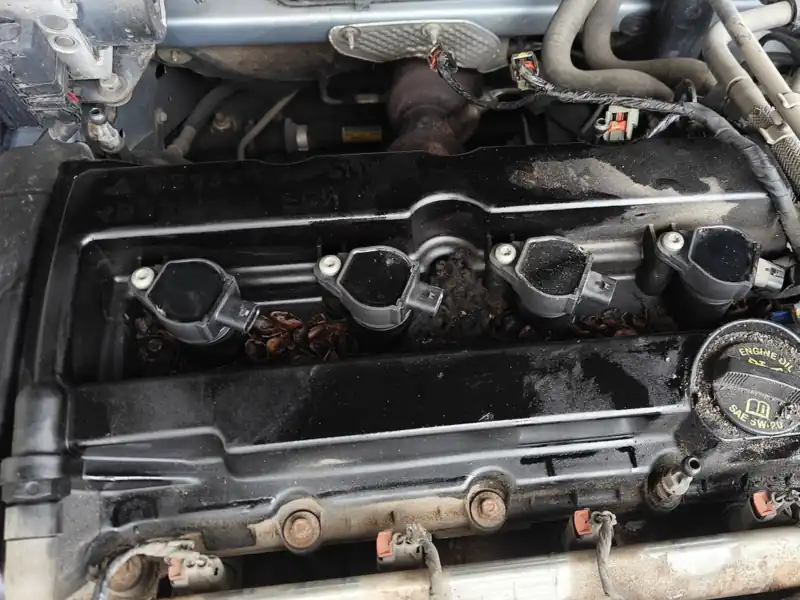
Engine Doctor fixes oil and coolant leaks at your house in Kansas City, Kansas. Josh Anderson finds where the leak starts and which gasket failed. Some gaskets sit right on top of the engine and some sit deep inside it, so the year, make and model decide how big the job is. You get a clear quote first. Call or text (913) 256-5056.
- Who
- Josh Anderson, owner
- What
- Oil and coolant leaks, gaskets
- Where
- At your home, Kansas City, KS
- Call or text
- (913) 256-5056
Put cardboard under it tonight
The easiest way to learn about a leak is a flattened cardboard box. Slide it under the front of the car when you park for the night. In the morning you have a map. Where the spots land tells you roughly which part of the car is leaking, and the color tells you what is leaking.
Take a photo of the cardboard with the front tire in the frame and text it to Josh with the year, make and model. It takes a lot of the guessing out before he comes over.
Reading the color of the drip
Color is the quickest clue to what is leaking, and some spots aren't engine leaks at all. Josh also does transmission and power steering fluid service, so if the spot turns out to be one of those, he can tell you what it means.
- Brown or black and slick: engine oil. Fresh oil is lighter and darkens with use.
- Green, orange or pink with a sweet smell: coolant. Keep pets and kids away from it, since it is poisonous and tastes sweet to them.
- Red or reddish brown: often transmission fluid, and on some cars power steering fluid.
- Clear to yellowish and slick, near a wheel: possibly brake fluid. Don't drive the car until it is checked.
- Plain water after running the air on a hot day: condensation from the air conditioning, and normal.
The gaskets that leak most often
A gasket is a seal squeezed between two metal parts. Years of heating up and cooling down make it hard and flat, and it stops sealing. These are the usual ones on an engine.
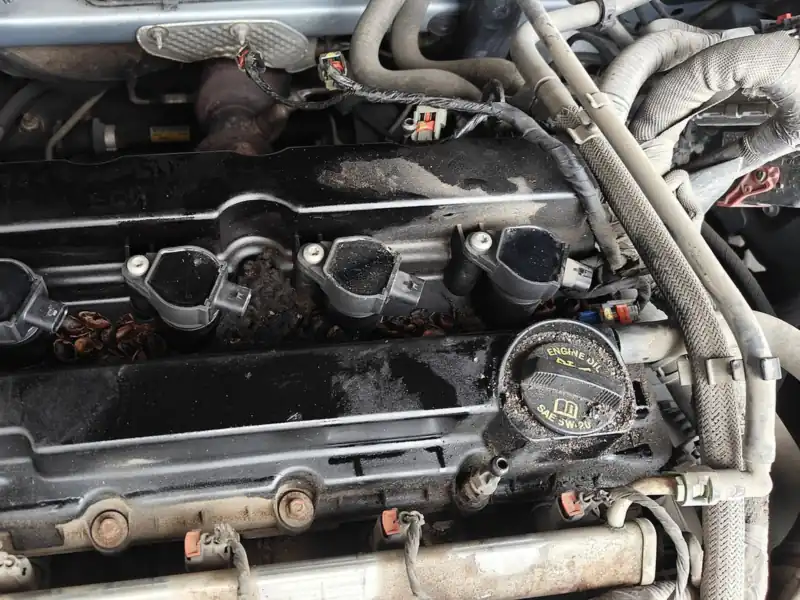
- Valve cover gasket. On top of the engine. Oil seeps down the sides and can drip onto the hot exhaust, which is where a burning smell comes from.
- Oil pan gasket. At the very bottom. Leaves drips right under the engine. On some cars the pan is easy to reach, and on others parts of the front end have to come down first.
- Intake manifold gasket. Can leak air, which makes the engine idle rough, and on some engines it can leak coolant too.
- Head gasket. Between the head and the block. When it fails it can leak oil or coolant on the outside, or let coolant into the cylinders or the oil. This is the serious one, and the head gasket guide covers the signs.
Smoke and smells
A burning oil smell after a drive, or a little smoke coming up from under the hood at a stoplight, is usually oil landing on something hot. Valve cover leaks are the classic cause, because on many engines the exhaust manifold sits right below. Oil on a hot exhaust can catch fire in a bad case, so it is worth fixing.
A sweet smell like syrup around the front of the car points to coolant. That can be a gasket, but it can also be a radiator or a radiator hose, which are on Josh's list as well. White smoke from the tailpipe with that same smell points inside the engine, usually to the head gasket.
Why a small drip still matters
Plenty of cars drip a little for a long time. But oil that leaks onto the serpentine belt and rubber hoses softens them and shortens their life. Oil on the exhaust smokes and stinks. And a car can lose more oil while you drive on I-70 or I-435 than it ever shows on the driveway. Over time the level can get low enough to hurt the engine.
Coolant leaks are less forgiving. Low coolant leads to overheating, and overheating leads to the big repairs. Until the leak is fixed, check the oil and coolant levels with the engine cold and top them off if they are low. Never open a hot radiator cap.
Old gaskets get hard, and some leak more in a Kansas City winter when the cold shrinks the rubber. So spots that look bigger in January than in July aren't unusual.
Easy to reach, or buried
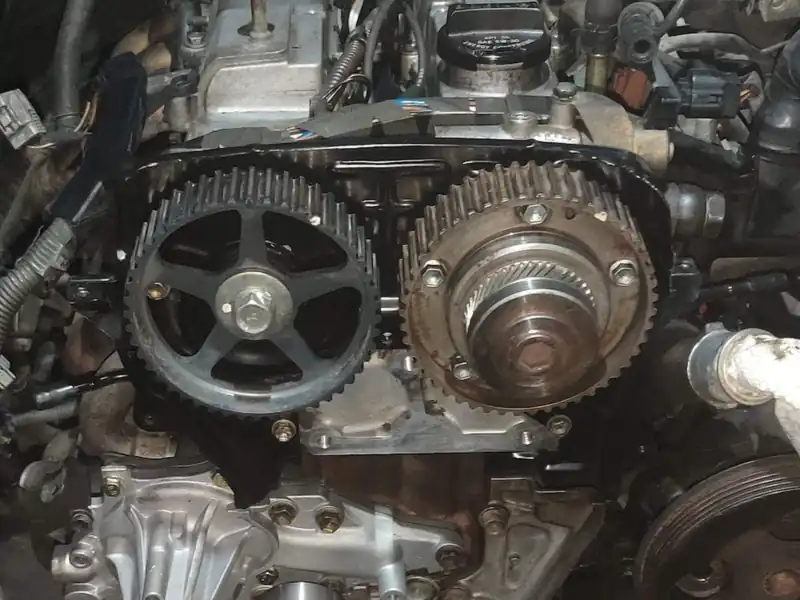
What a gasket job takes depends on the car more than the gasket. A valve cover on one engine is a row of bolts right on top. On another it sits under the intake and a pile of wiring. Oil pans vary just as much. That is why Josh wants the year, make and model before he quotes it.
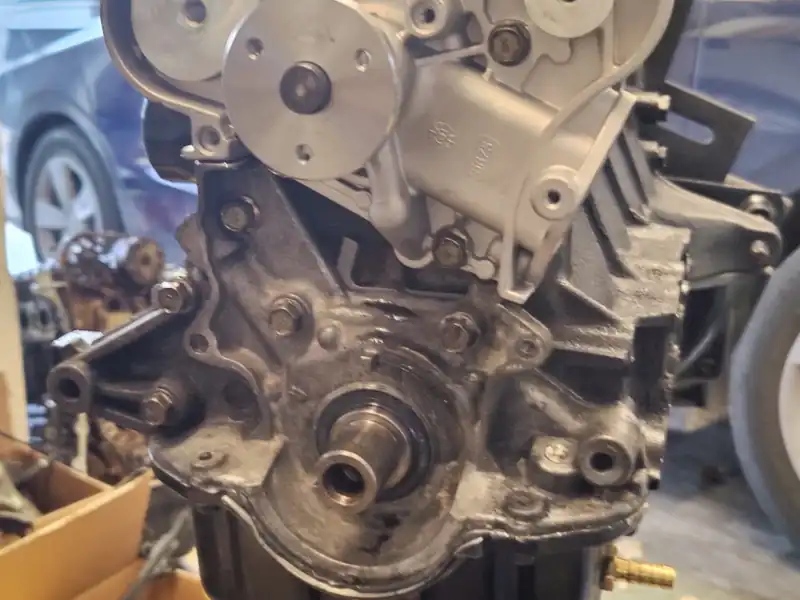
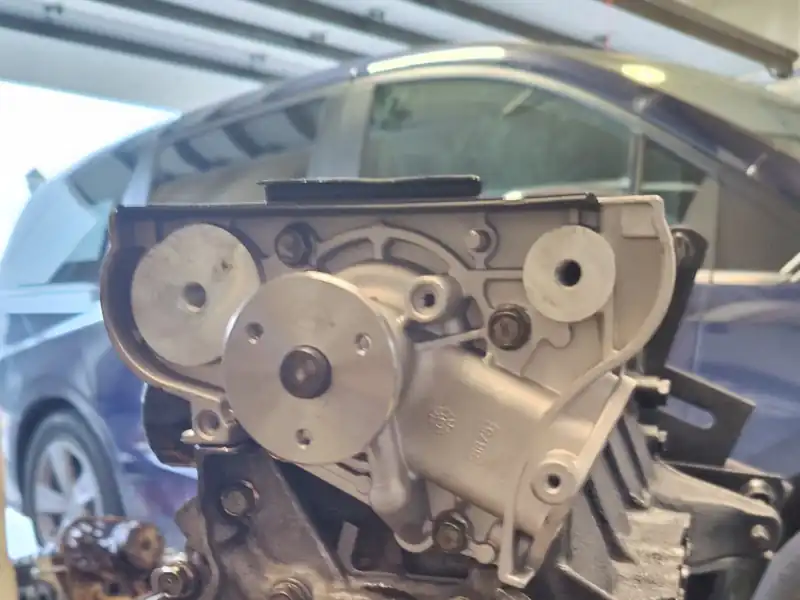
Some leaks come from places that need a lift and a shop, like the seal at the back of the engine where it meets the transmission. That repair usually means pulling the transmission. Josh will tell you if your leak is one of those before any work starts.
Questions people ask
How do I find where my car is leaking oil?
Put a sheet of cardboard under the engine overnight and look at where the spots land and what color they are. Oil is brown or black, and coolant is usually green, orange or pink and smells sweet.
Is a valve cover gasket leak serious?
It is usually a slow leak, but the oil can drip onto the hot exhaust and smoke or smell. It is a common repair, and on many engines the valve cover is easy to reach.
Can I drive with a coolant leak?
Only with a close eye on the temperature gauge and the coolant level. If the gauge climbs, pull over and shut the engine off, and never open a hot radiator cap.
Why does my car smell like burning oil?
Most often oil is leaking onto the exhaust, commonly from a valve cover gasket. Get it checked, since oil on a hot exhaust can smoke and in bad cases catch fire.
Who fixes oil leaks at home in Kansas City, KS?
Engine Doctor Mobile Vehicle Repair, run by Josh Anderson in Kansas City, Kansas, replaces leaking gaskets at your home. Call or text (913) 256-5056 for a clear quote.
You get a clear quote before Josh starts, and the work happens at your house, on your time.
Josh Anderson, ownerBased in Kansas City, Kansas · Every day of the week, 6 a.m. to 10 p.m. Call or text and Josh gets back to you.