Brake noises explained: what each sound means and which ones mean stop
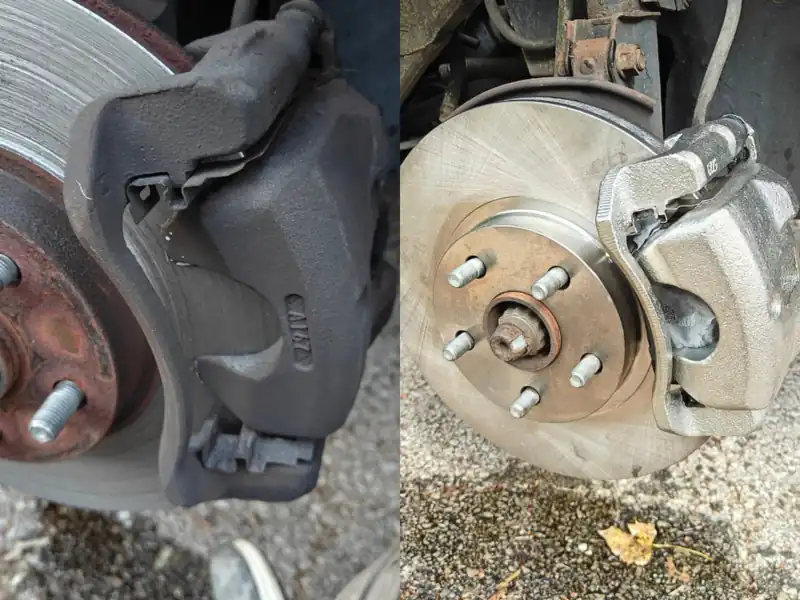
Brake noises usually point to a specific problem. A high squeal often means the pads are wearing thin. Grinding usually means metal on metal, so stop driving the car. A pulsing pedal points to the rotors, and a soft pedal or a pull to one side needs a look right away. Josh Anderson of Engine Doctor, based in Kansas City, Kansas, does brake work in your driveway. Call or text (913) 256-5056.
- Squeal
- Often the wear tab. Book it soon.
- Grinding
- Metal on metal. Stop driving on it.
- Soft pedal
- A hydraulic problem. Don't drive it.
- Call or text
- (913) 256-5056
A high squeal when you press the pedal
Many brake pads have a small metal tab built into them. When the pad wears down far enough, the tab touches the rotor and squeals. It is a warning noise put there on purpose, and it usually means the pads are close to the end. You have some time, but not a lot. Book the brake job now instead of waiting for the next sound.
Not every squeal is the wear tab. Brake dust, pads glazed from heat, and worn or missing clips and shims can squeak too, and some pads are just noisier than others. The way to know is to pull the wheel and look at how much pad is left.
A scrape on the first few stops of the morning
After a rainy night, or one of those muggy Kansas City summer mornings, a thin coat of rust forms on the rotors. The first few stops scrape it off, and you hear a light grinding that goes away once the rotors are clean. That one is normal. If the noise is still there after a few stops, it is something else.
Winter does its own damage. Road salt and slush sit on the brakes for weeks at a time, and rust can build up where the pads ride in their brackets until a pad sticks and drags. A car that comes out of February with a new scraping sound is worth a look.
Grinding: stop driving the car
A deep grinding or growl when you brake usually means the pad material is gone and the steel backing plate is scraping the rotor. You may feel it in the pedal too. This is the noise that turns a pad job into a pads and rotors job, and into more parts if it goes on long enough. Worse, the car doesn't stop the way it should.
Stop driving on grinding brakes. Park the car and get it looked at. This is one place where mobile repair makes real sense, because the car stays parked and Josh does the brake work where it sits.
Now and then a grinding noise turns out to be a small stone caught between the rotor and the thin metal shield behind it. That one scrapes all the time, even when you aren't braking. It is an easy fix, but have someone look instead of guessing which one you have.
A clunk or knock when you stop
A single clunk when you first press the brakes, or when you brake right after backing up, often comes from something loose. The caliper or its bracket may have loose bolts, the pads may have room to shift in the bracket, or a worn suspension part may be letting the wheel move when you brake. Loose brake parts are a safety problem. Have it checked soon instead of turning the radio up.
The pedal pulses or the steering wheel shakes
If the brake pedal pushes back in a steady pulse when you stop from speed, or the steering wheel shimmies, the rotors are the usual cause. People call it warped rotors. Most of the time the rotor has worn unevenly and is thicker in some spots than others, and the pads feel every high spot as it turns. You notice it most coming off the highway, like stopping at the bottom of a long I-435 exit ramp.
The fix is usually new rotors along with pads. Lug nuts tightened unevenly can help cause it, which is why wheels should go back on in a star pattern and to the right tightness.
One pulse that isn't a problem: on ice, or in a panic stop, the anti-lock brakes can buzz and pulse the pedal. That is the system doing its job. Keep steady pressure on the pedal and let it work.
Pulling to one side, or a pedal that sinks
If the car pulls left or right when you brake, one side is braking harder than the other. A sticking caliper, a brake hose that has collapsed inside, or pads soaked with fluid or grease are common causes. Uneven tire pressure can do it too. A pull makes a hard stop harder to control, so don't let it ride.
A pedal that feels soft or spongy, or sinks toward the floor, is the most serious one on this page. It usually means air in the lines, a fluid leak or a worn master cylinder. Brake fluid also soaks up water from the air over time, which is one reason your owner's manual lists when to change it. Look for wet spots on the inside of the wheels and under the car. Don't drive a car whose brake pedal sinks.
Stop now, book soon, or leave it
If you hear or feel any of these, here is roughly how worried to be.
- Stop driving: grinding, a pedal that is soft or sinks, a red brake light with the parking brake off, a hard pull when you brake
- Book it soon: a squeal that doesn't go away, a clunk when you stop, a pulsing pedal
- Usually normal: a scrape on the first stops after rain that goes away, the anti-lock pulse on ice
Getting it looked at in your driveway
A short video with the sound on tells Josh a lot. If it is still safe to drive, record a few slow stops in a parking lot, then text it to (913) 256-5056 with the year, make and model. He can usually tell you if it sounds like pads, rotors or something else, and you get a clear quote for the brake work before he starts. Then he comes to your house and does it there, so the car with bad brakes stays off the road.
Questions people ask
Why do my brakes squeak when the pads look fine?
Brake dust, glazed pads or worn clips and shims can all squeak, and some pads are just noisy. You can't see the whole pad from outside, so it is worth having it measured with the wheel off.
Is it safe to drive with grinding brakes?
No. Grinding usually means metal is scraping metal, which hurts stopping and chews up the rotors. Park it and have the brakes looked at.
Why does my brake pedal vibrate when I stop?
Usually the rotors have worn unevenly. If it only happens on ice or in a hard stop, it may be the anti-lock brakes working, which is normal.
Why does my car pull to one side when I brake?
A sticking caliper, a collapsed brake hose, contaminated pads or uneven tire pressure are common causes. Have it checked soon, because a pull makes a hard stop harder to control.
Can my brakes be done at my house?
Yes. Engine Doctor is based in Kansas City, Kansas, and Josh does brake work in your driveway. Text him a video of the noise at (913) 256-5056 for a clear quote.
You get a clear quote before Josh starts, and the work happens at your house, on your time.
Josh Anderson, ownerBased in Kansas City, Kansas · Every day of the week, 6 a.m. to 10 p.m. Call or text and Josh gets back to you.