
Timing belt or timing chain: how to tell which your car has, and why it matters
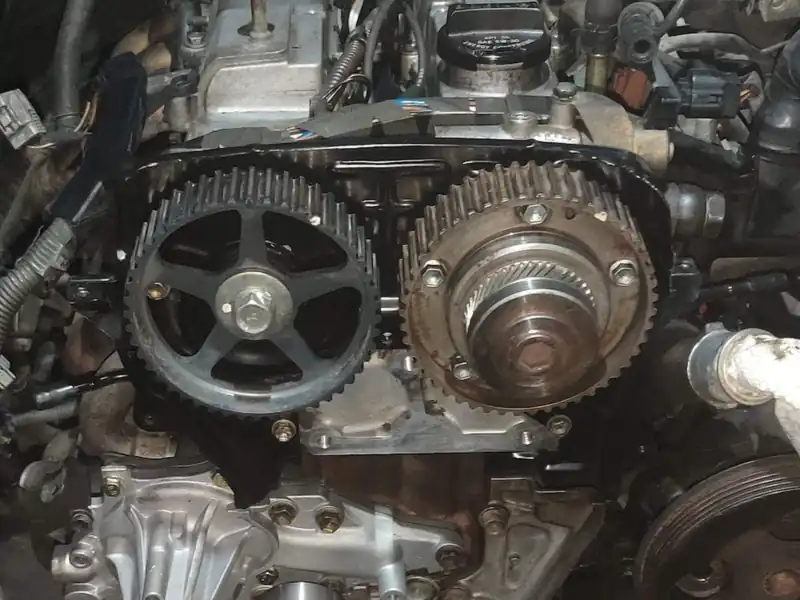
Your owner's manual is the surest way to tell if your engine has a timing belt or a timing chain. A belt is rubber and has a replacement interval. A chain is metal and usually lasts longer, but can stretch. Josh Anderson of Engine Doctor in Kansas City, Kansas, replaces timing belts and timing chains at your home. Call or text (913) 256-5056 with your year, make and model.
- Belt
- Rubber, has a set interval
- Chain
- Metal, can stretch with age
- How to tell
- Owner's manual, or ask Josh
- Call or text
- (913) 256-5056
What the timing belt or chain does
Two shafts have to stay in step inside every engine. The crankshaft turns as the pistons go up and down, and the camshaft opens and closes the valves that let air in and exhaust out. If they drift apart by even a fraction of a turn, the engine runs badly or not at all. The timing belt or timing chain is what keeps them together.
Nearly every engine has one or the other. A few have both, or more than one chain. Which one yours has changes how you take care of it.
How to find out which one your car has
Start with the owner's manual. Look in the maintenance schedule. If it lists a timing belt replacement at a set interval, you have a belt. If there is no timing item listed, it is very likely a chain. If you don't have the manual, many carmakers post manuals online by year and model.
You can also look under the hood. A timing belt usually sits behind plastic covers on the side of the engine, and sometimes you can see the edge of a toothed rubber belt through a gap. A chain sits behind a metal cover that is bolted and sealed to the engine, because it runs in oil. But engines are crowded and covers fool people, so this is a hint, not proof.
The simplest way is to call or text Josh the year, make, model and engine size. He can tell you what is in there and whether anything is due.
Timing belts: rubber, with a deadline
A timing belt is a toothed rubber belt reinforced with cords. Rubber ages with heat and miles, and it doesn't always look bad before it fails. That is why carmakers give it a replacement interval in the owner's manual, by miles or by years, whichever comes first. Age counts as much as miles on a car that isn't driven much.
Warning signs are few, which is the problem. Some people hear a ticking or slapping from behind the covers, see oil soaking a belt from a leaking seal, or notice the engine running rough. Many get no warning at all. The belt just snaps and the engine stops, and the car will crank but not start.
On many engines that is the end of it, and a new belt gets it going again. On others, called interference engines, the valves and pistons share space and only the timing keeps them from hitting. When the belt breaks there, the valves can get bent and the repair grows into major engine work. Josh can tell you which kind you have. That risk is the main reason not to stretch a belt past its interval.
Timing chains: metal, but not forever
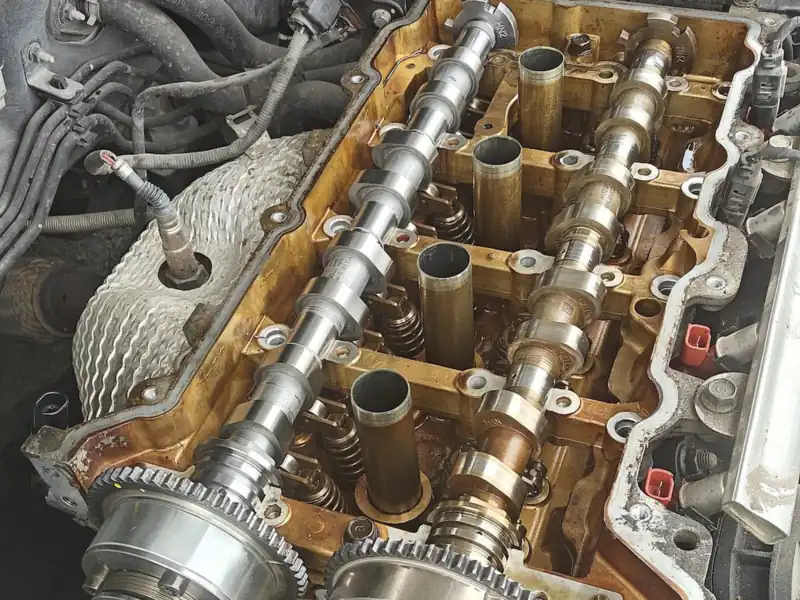
A timing chain looks like a heavy bike chain and runs inside the engine in oil. Most are meant to last a long time, and many manuals list no interval for them. But chains do stretch, and the guides and tensioner that keep them tight can wear out, especially when oil changes get skipped and dirty oil wears things faster.
Signs of a stretched chain include a rattle for a few seconds on a cold start, a rattle that comes and goes at idle, rough running and a check engine light with timing-related codes. A stretched chain can jump a tooth or break, and on an interference engine that does the same damage as a broken belt.
Regular oil changes with the oil your manual calls for are the best thing you can do for a chain.
What usually gets replaced along with it
Getting to the timing parts is most of the labor, so it makes sense to replace the wear parts in the same area while it is open. Which ones depends on the engine. These are the common ones.
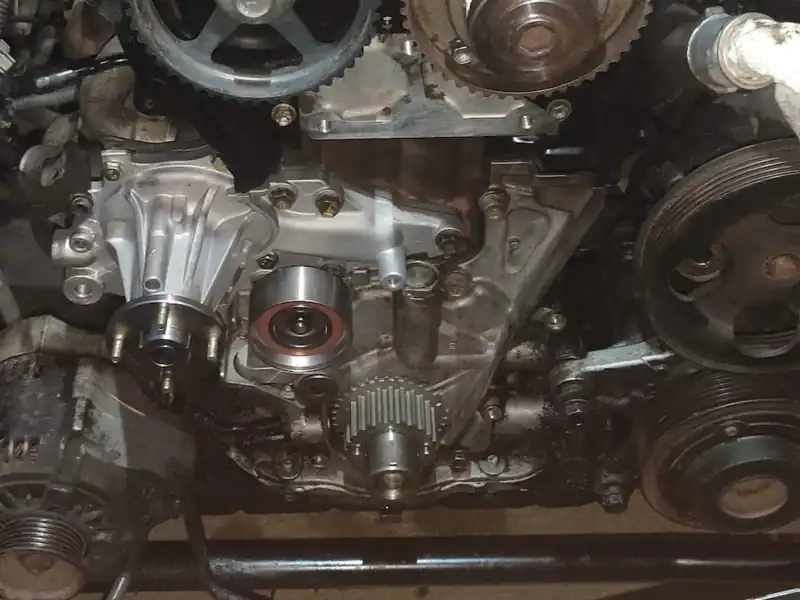
- The tensioner, which keeps the belt or chain tight
- The idler pulleys, which guide the belt and have bearings that wear
- Chain guides, on engines with a chain
- Seals that sit behind the timing parts, if they are leaking
- On many engines the water pump sits behind the timing belt, and a lot of shops change it at the same time. Ask Josh how he handles that on your car.
Getting it done at your house
Timing belts and timing chains are both on Josh's list, and so are the tensioners, pulleys and camshafts in that same part of the engine. Text him the year, make, model and mileage, and whether the belt has ever been changed, if you know. He will tell you what your engine has and give you a clear quote before he starts.
Some timing chain jobs go deep into the engine. If yours is one that needs a shop and a lift, you will hear that from Josh before you count on a driveway job.
Questions people ask
How do I know if my car has a timing belt or a timing chain?
Check the maintenance schedule in your owner's manual. A listed timing belt interval means a belt, and no timing item usually means a chain. Or text Josh the year, make, model and engine size.
When should a timing belt be replaced?
At the interval in your owner's manual, by miles or years, whichever comes first. If you bought the car used and have no record of it being done, treat it as due.
What does a stretched timing chain sound like?
Usually a rattle for a few seconds right after a cold start, sometimes at idle too. A check engine light with timing codes often comes with it.
What happens if a timing belt breaks while driving?
The engine shuts off and will crank but not start. On an interference engine the valves can get bent, which turns a belt job into major engine work.
Does Engine Doctor replace timing belts and chains?
Yes, both are on Josh's list, along with tensioners, pulleys and camshafts. Call or text (913) 256-5056 for a clear quote at your home.
You get a clear quote before Josh starts, and the work happens at your house, on your time.
Josh Anderson, ownerBased in Kansas City, Kansas · Every day of the week, 6 a.m. to 10 p.m. Call or text and Josh gets back to you.